
The End of a Seven-Year Search, The Beginning of the Real Work
We expect to exchange contracts very soon and complete once the farmer has removed a redundant barn. It’s a significant moment—one that marks the end of a seven-year search and the beginning of the real work, where progress will be down to our project management.
This stage has been intense. We’ve been running two workstreams in parallel: finalising the purchase and working closely with our architect to prepare a new Class Q scheme.
A major frustration came when the estate agent finally provided an official plan showing the land we were purchasing. The sales brochure only included a small, unclear plan, so we’d asked the agent to show us the boundary on-site. Based on that understanding, we made our offer. Only months later, a larger scale plan was produced—and it showed a different boundary. To add to the complexity, alongside the usual conveyancing back-and-forth between buyer and seller, a third party—the buyer of the adjacent barn, who will be our future neighbour—was also involved. What should have taken a week stretched into months due to the slow exchanges between solicitors.
The barn came with existing permission, but with only one year remaining—meaning not just starting but completing the build within that time. It’s theoretically possible with rigorous planning, but there’s no room for delay. To give ourselves more time and flexibility, we submitted a fresh application with some design tweaks.
Timing was tight. The rules for Class Q changed in May 2025, reducing the maximum size allowed per dwelling. We submitted our new application just two days before the deadline to fall under the old, more generous rules that permit a larger build. It came right down to the wire, but we got it in.
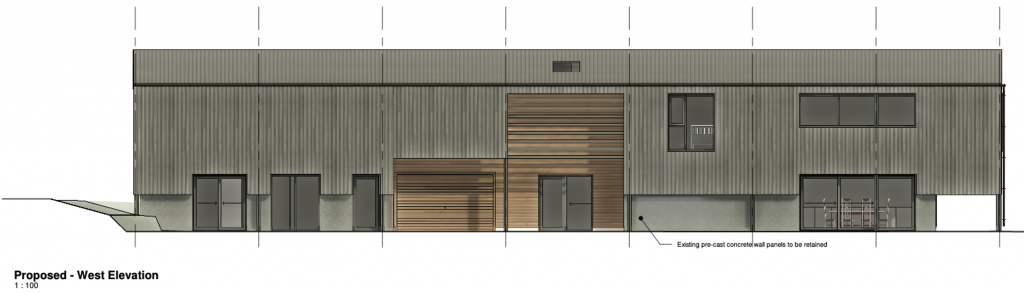
Even though we now own the land, we can’t begin any physical work. Touching the barn would enact the existing permission and lock us into its limitations, blocking the new application. So for now, the site remains untouched.
But we’re far from idle.
We’re using this time to plan properly. That means continuing our detailed work with the architect—developing the designs beyond what the Class Q submission requires, including structural details, foundations, insulation, wall build-ups, and roof construction. This level of detail is essential not only for the build but also to appoint a building inspector.
We’re also starting to line up trades. This won’t be a main contractor build—we’ll manage each trade ourselves: groundworkers, bricklayers, roofers, joiners, plasterers, electricians, plumbers. This hands-on approach gives us more control over quality and cost. The groundworks will start first, and we’ve already had a site meeting with a brilliant contractor we’ve worked with before.
By managing the trades directly, we take on the role of principal contractor, which means we’re legally responsible for site safety. We’re taking the time to understand our obligations under the CDM (Construction, Design and Management) regulations: how to keep the site safe, the paperwork required, and how to ensure we’re compliant if the Health and Safety Executive pays a visit. There’s a learning curve ahead, but it’s crucial.
Beyond the structure and compliance, we’re also making design choices: windows, doors, bathrooms, kitchen layouts. These decisions feed directly into the timeline and budget. The more we can lock down now—quotes, suppliers, specifications—the smoother the build phase will be.



Recent Comments